Ten bonds. One account.
6.36% yield.
Get a ready-made, diversified bond strategy that pays regular interest throughout the year—in one streamlined account.
Sign up10-bond diversification
Automatic reinvestment
20 annual payouts

Bond investing.
Minus the complexity.
01
Skip the screening
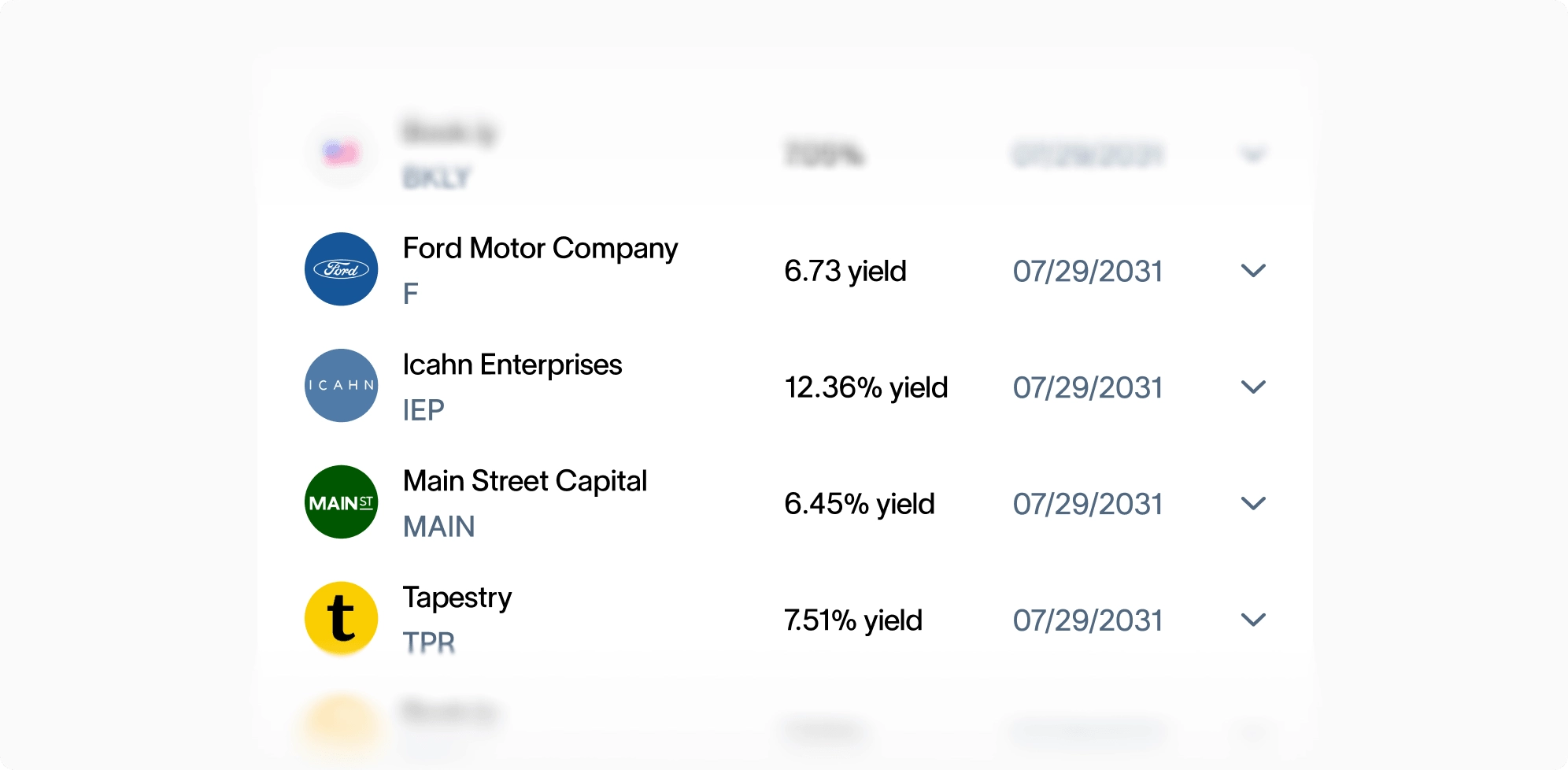
Instead of screening and buying individual corporate bonds, invest directly in a diversified portfolio of ten investment-grade and high-yield bonds.
02
Set your allocation
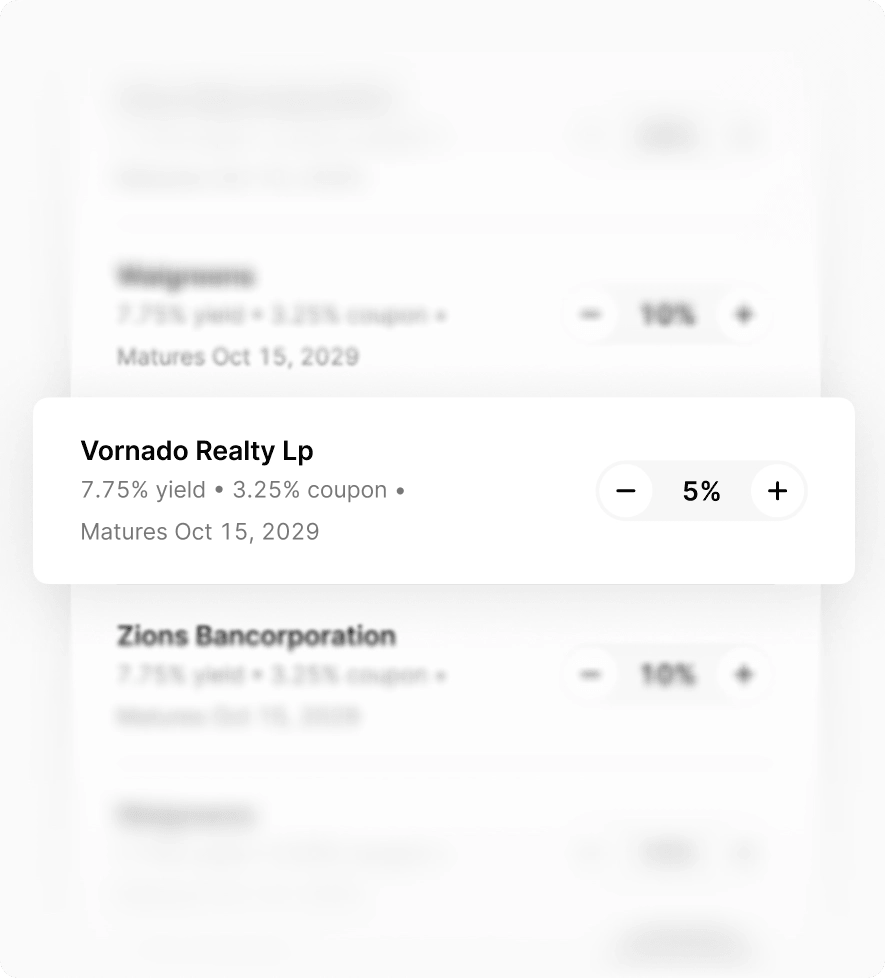
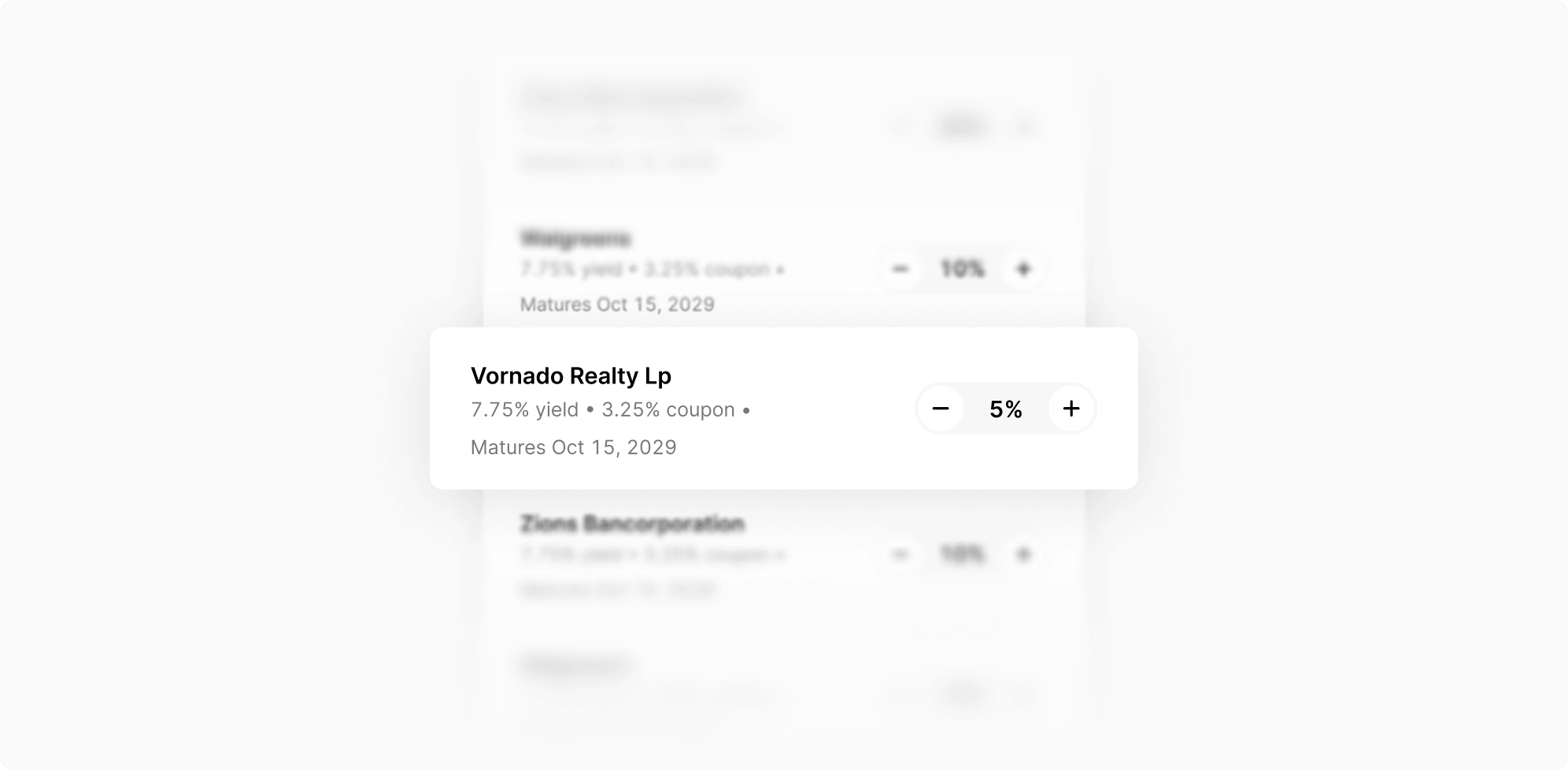
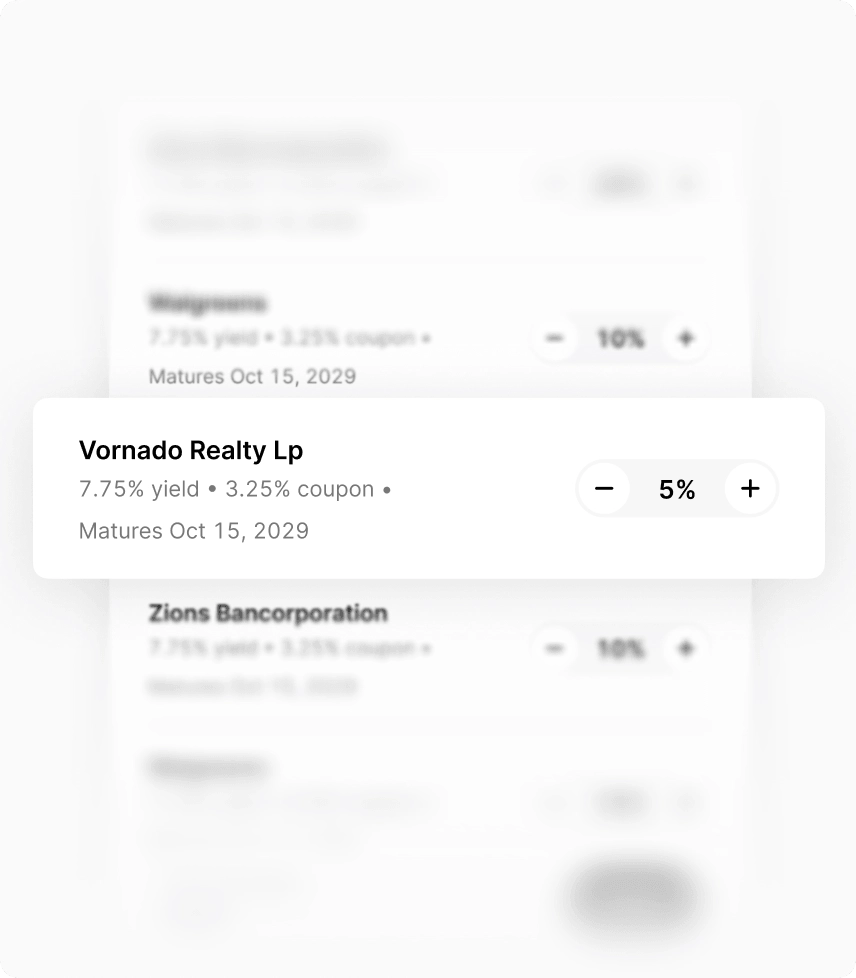
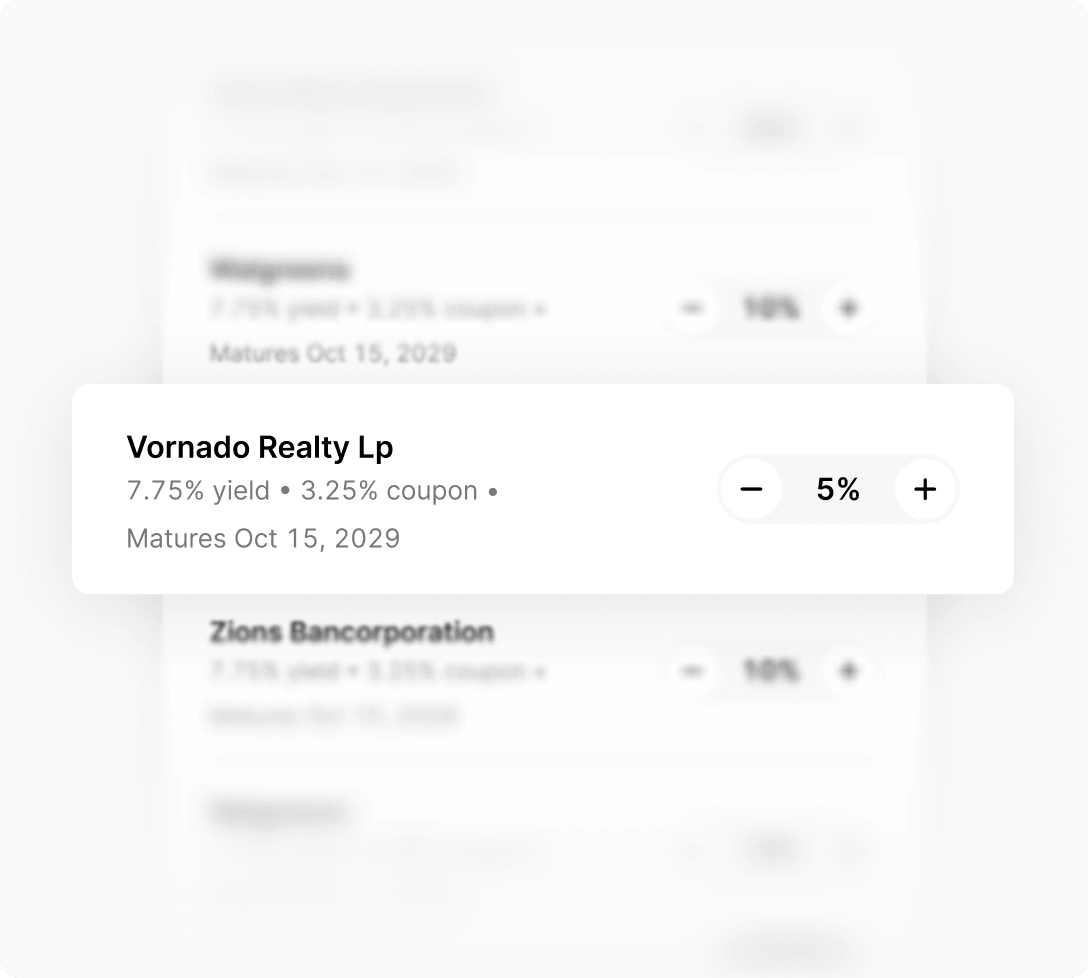
Split your funds evenly or adjust your target for each bond based on your goals for yield and risk. Every deposit after that follows it automatically.
03
Get paid regularly
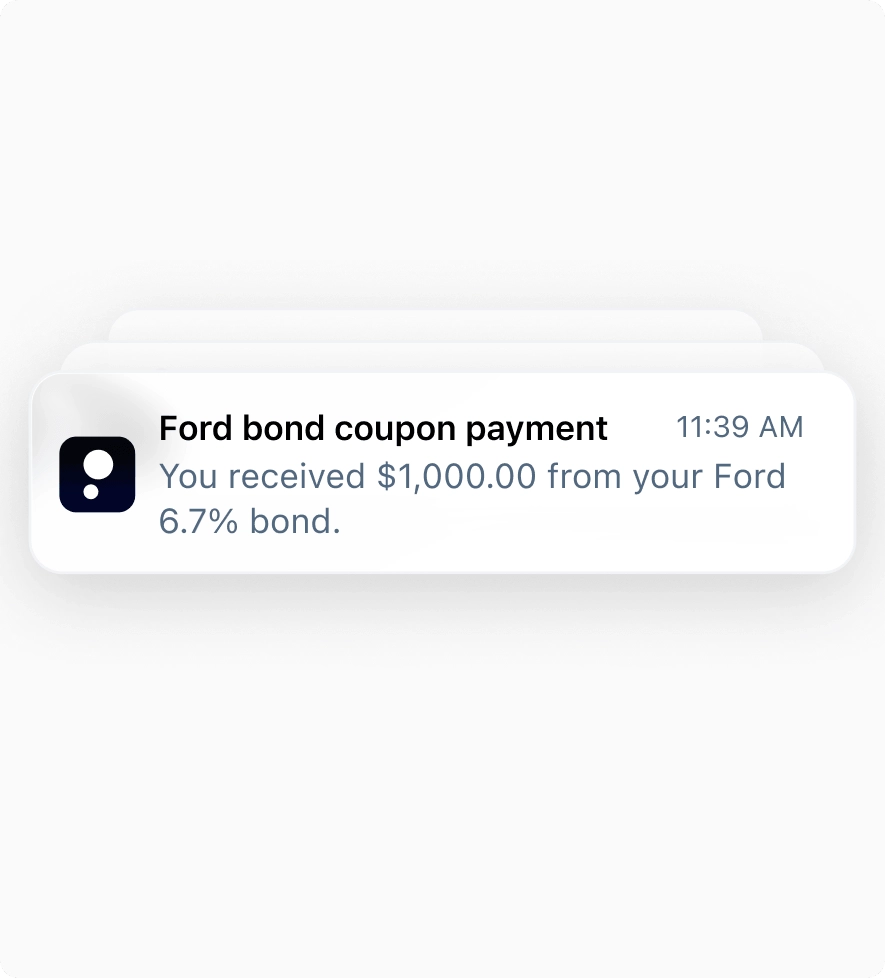
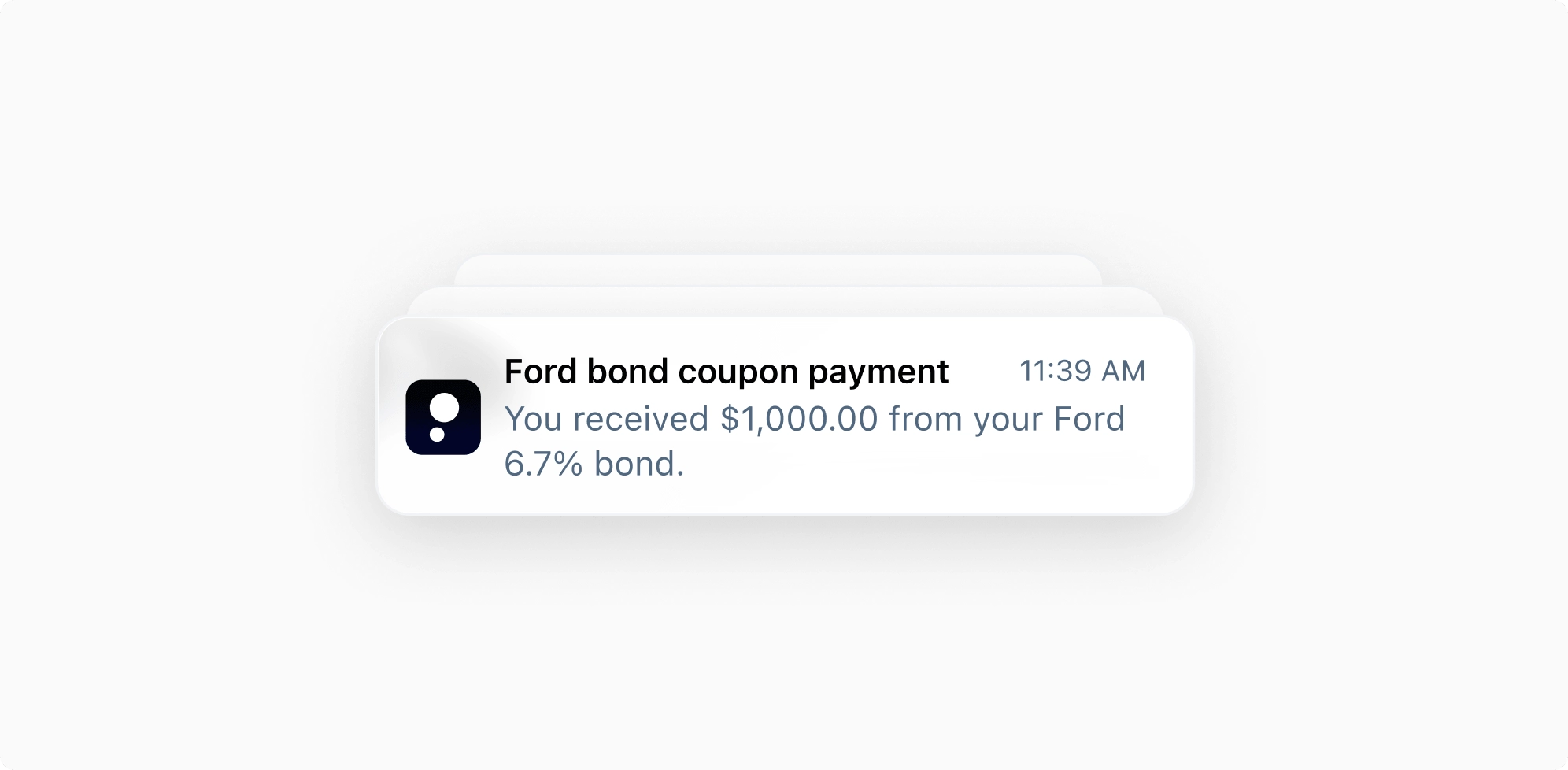
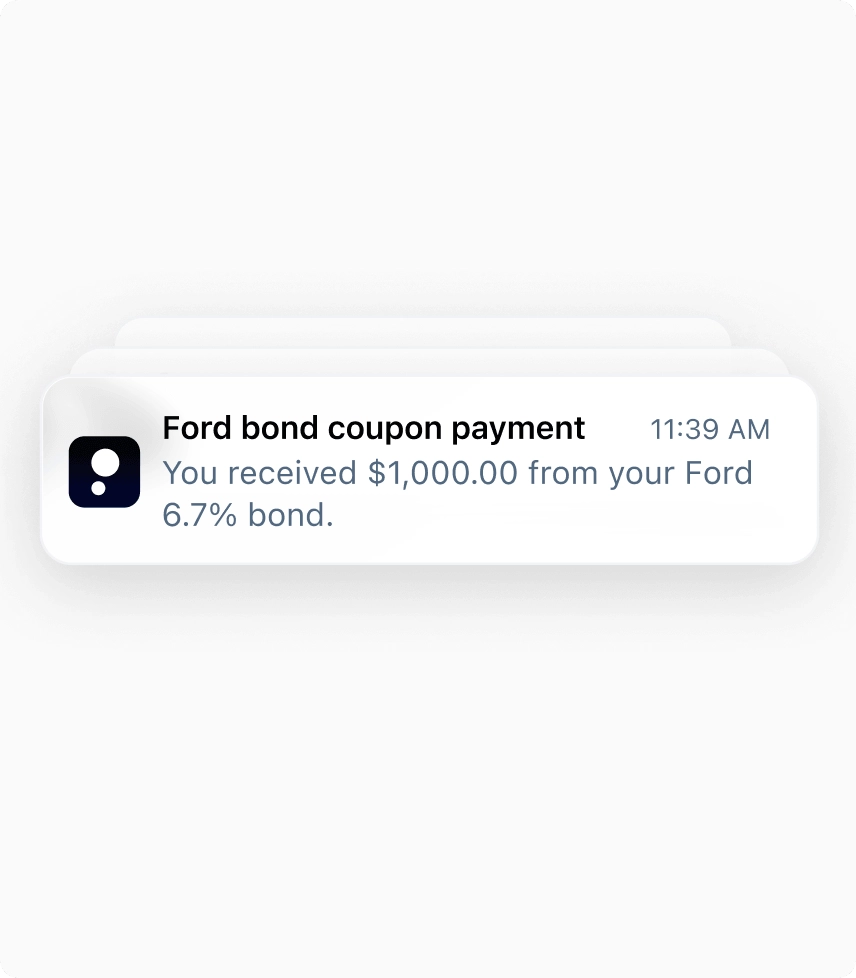
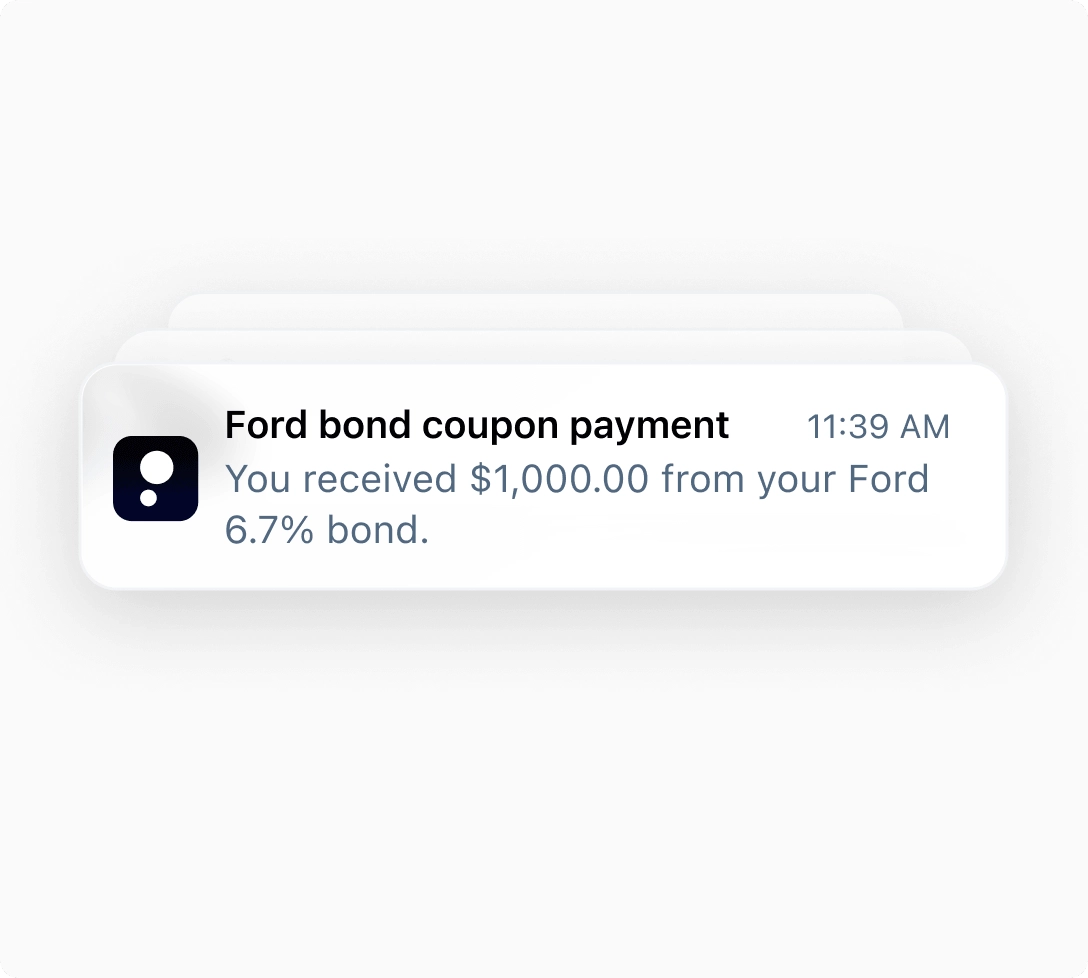
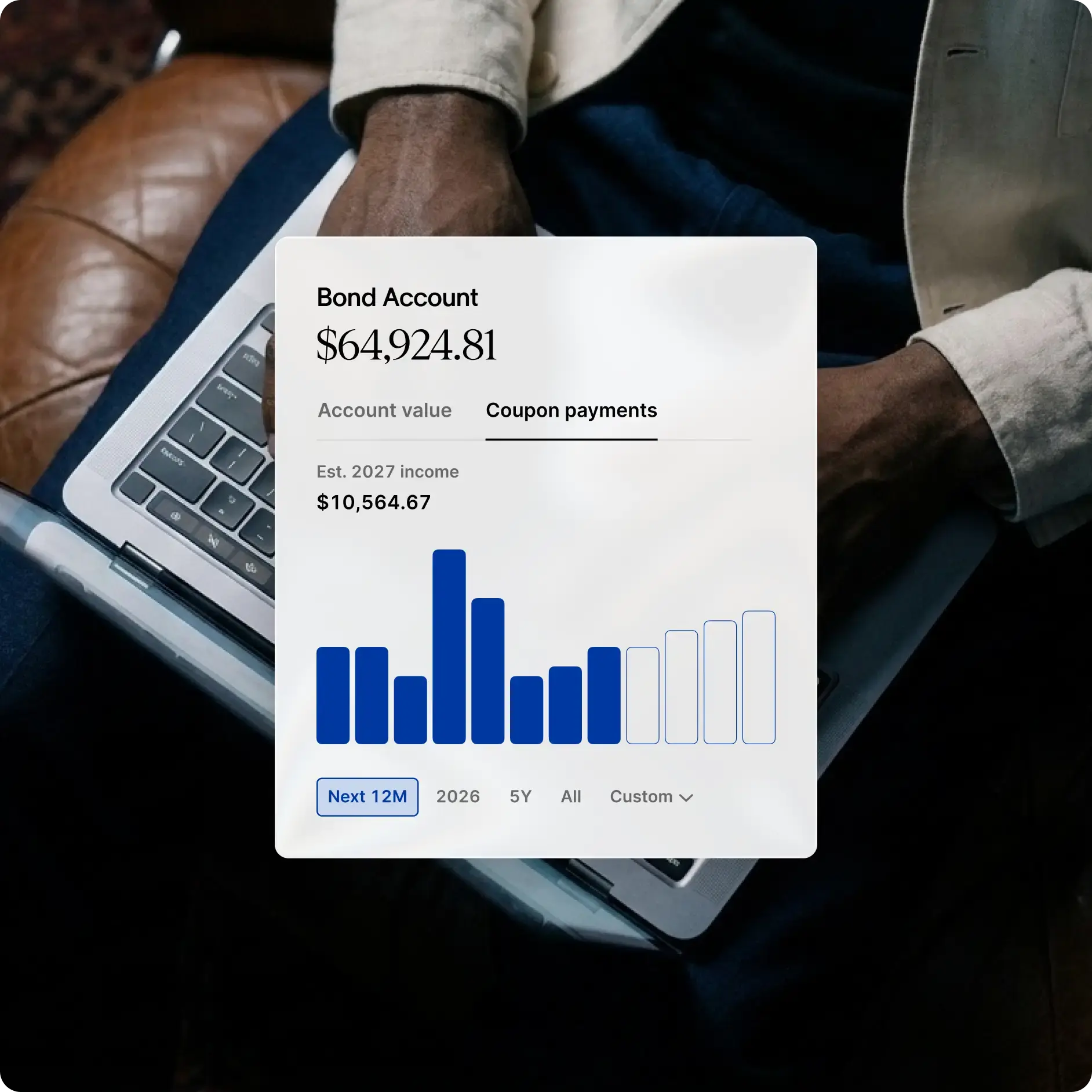
Each bond pays interest twice per year, with payment dates spread across the calendar. Together, they generate 20 interest payments during the year.
Reinvested by default
We automatically reinvest your interest and principal once they reach $100. Prefer cash? Redirect payouts to your brokerage account at any time.
Designed for how
you actually invest
Start with just $1,000
Most brokerages require $1,000 or more to buy just one bond. Our fractionalized assets mean you can buy an entire portfolio for the same price.
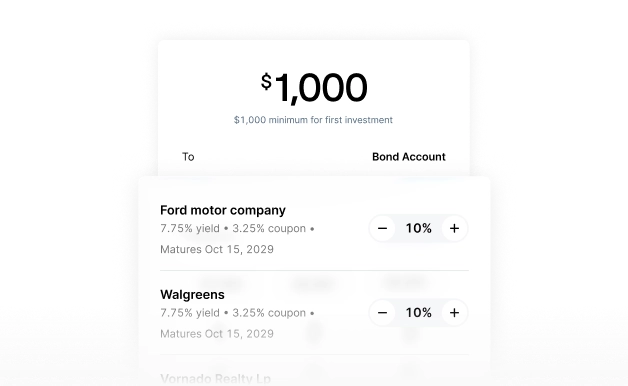
Stay on target automatically
After your first deposit, we automatically invest new cash in whichever bond is furthest below its target, helping keep your portfolio on track.
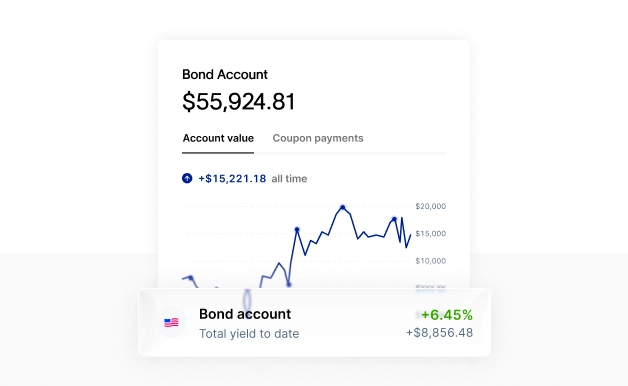
Track all your earnings
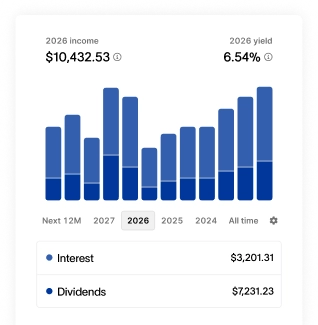
Your Income Hub provides a monthly breakdown of your Bond Account interest. Plus, you can see a forecast of your expected income for the year ahead.
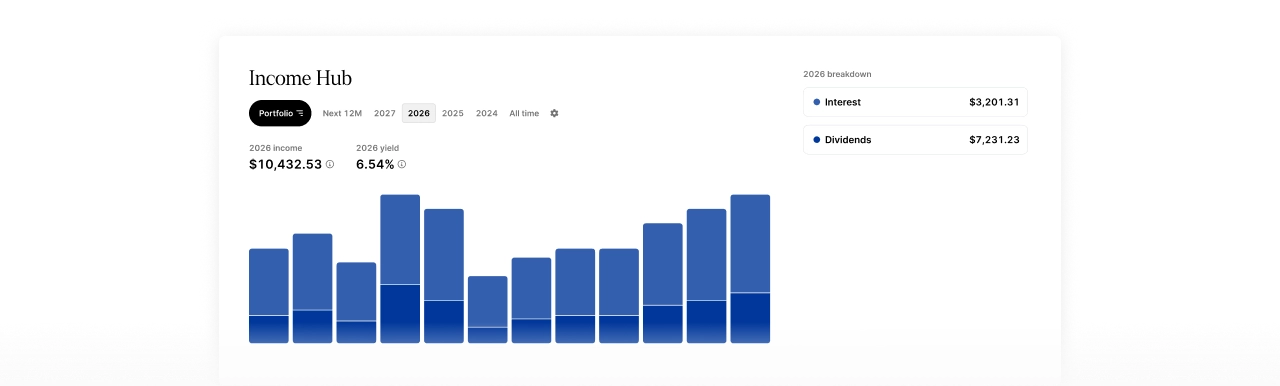
See what’s currently inside the Bond Account
We select each bond for its liquidity and staggered interest payments. If we make changes to the lineup, we'll let you know what's changing and why.
Bond holdings
Yield and allocation
 Apollo Debt Solutions BDC
ALLSO 6.7% 07/29/2031
APODS
6.75% Yield
~10%
07/29/2031
 Centene
CNC 3.0% 10/15/2030
CNC
6.04% Yield
~10%
10/15/2030
 Edison
EIX 6.95% 11/15/2029
EIX
6.19% Yield
~10%
11/15/2029
 Ford Motor Company
F 7.45% 07/16/2031
F
6.23% Yield
~10%
07/16/2031
 Helmerich & Payne
HP 2.9% 09/29/2031
HP
5.72% Yield
~10%
09/29/2031
 Main Street Capital
MAIN 6.95% 03/01/2029
MAIN
6.36% Yield
~10%
03/01/2029
 Piedmont Office Realty Trust
PDM 3.15% 08/15/2030
PDM
6.01% Yield
~10%
08/15/2030
 Prospect Capital
PSEC 3.437% 10/15/2028
PSEC
8.01% Yield
~10%
10/15/2028
 V.F.
VFC 2.95% 04/23/2030
VFC
6.09% Yield
~10%
04/23/2030
 Vornado Realty Trust
VNO 3.4% 06/01/2031
VNO
6.10% Yield
~10%
06/01/2031
One platform.
Multiple ways to earn.
| Bond Account | Treasury Account | High-yield cash account | |
|---|---|---|---|
| Yield | 6.36% | 4.29% | 3.30% |
| Interest rate | Set at purchase | Fixed | Variable |
| What you hold | Corporate bonds | US Treasuries | Cash at partner banks |
| Interest payments | Up to 3/month | Up to 4/month | 1/month |
| Risk | Spread across 10 issuers | Government-backed | FDIC-insured |
| Get started | Get started | Get started | |
Have questions? Find answers.
How do I invest in a Bond Account on Public?
You can find the Bond Account alongside other yield accounts (Treasury and High Yield Cash) on the Public app or on the web. You can fund the account from your existing buying power or from an external account with an investment of $1,000 or more. Each investment of $1,000 will be used to purchase a portfolio of ten fractional investment-grade and high-yield bonds in equal par value allocations. You may make a one-time investment into the Bond Account or schedule recurring investments on a weekly or monthly basis.
What are the benefits and risks of investing in a Bond Account?
One key benefit of a Bond Account is locking in your yield at time of purchase. Unlike a savings account or other variable rate account, your yield for each bond is fixed at the time of purchase, though the return may be affected if you do not hold a bond to maturity, or if the issuer defaults or calls the bond. Other benefits include the ability to invest in ten bonds for $1,000, where typically individual bonds have minimums of $1,000+. However, fractional bonds carry some risks, which can be found here. Other risks include the risk of default, liquidity risk, and inflation risk (if inflation outpaces the fixed income from a bond, this may reduce the real return on investment.)
How does the Bond Account compare to other yield accounts?
Compared to Public’s High Yield Cash Account and Treasury Account, a Bond Account generates a higher yield, but comes with higher risk of default and illiquidity. Like a Treasury Account on Public, the Bond Account reinvests interest at the current rate automatically once it hits a minimum threshold (in this case ~$100). Similar to other yield accounts on Public, cash in a Bond Account may be withdrawn at any time, but there is a small fee if bonds need to be sold to do so ($0.50 per $100).
What happens to my investment if interest rates change?
Once you are invested in a Bond Account, your yield on that investment is locked in unless a bond in the account defaults, is called, or is sold. That means that even if interest rates fall (i.e. the Federal Reserve cuts rates), your Bond Account yield for deposits already made will not change. Note that the Bond Account yield will fluctuate daily and subsequent deposits into the account may be at different yields than your original deposit.
Are there any fees for the Bond Account?
Purchases and Sales in the Bond Account are subject to a markup of 50 basis points (i.e. $5 per $1,000 invested). In addition, there is a $3.99 monthly fee for the account which is waived until 2025. The monthly account fee will also be waived for all Public Premium members. See fee schedule.
How is my Bond Account protected?
A Bond Account at Public is a separate account from your brokerage account but cash and securities are combined for SIPC coverage limits. SIPC coverage protects assets up to a total of $500,000, of which $250,000 applies for cash. There are additional terms and limits on SIPC coverage that aren’t discussed here. For full details, please refer to www.SIPC.org and read more on our SIPC FAQ.
Bring bond income into your portfolio
Public earns high marks for ease-of-use and its investment selection.